

Skilled Nursing: Considerations, Care & Recovery
What to Expect When the Faced with the Unexpected
This “Aging with Grace” article was written by Jennifer Sanders and published in the Catholic Advance, The Official Newspaper of the Diocese of Wichita.
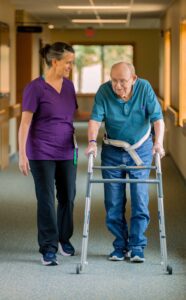 At lot of times when we think about senior living and the services we offer at Catholic Care Center, and communities like ours, we think about the various levels of living in which a person decides proactively to come and live. That decision might be spurred by a change in condition or the timeline might be altered by an unexpected event, but for the most part the people who make a move into a senior living community have had the opportunity to come and look around and explore their future home or at the very least had their family check it out for them.
Other times a person finds themselves in the hospital with an illness or injury and suddenly they are faced with deciding which community to select for their short-term skilled nursing needs. Because they likely didn’t anticipate this illness or injury (we don’t have a crystal ball after all), and because they may not have even known what skilled nursing was or considered it as a future need – now they are trying to make a decision from a list of unknown, unfamiliar places, and that is not something anyone wants to do, especially when they aren’t feeling their best.
So What is Skilled Nursing?
It’s a short-term intensive nursing and rehabilitation program for people who need to regain their strength after being hospitalized. Patients typically spend two to three weeks in skilled nursing, depending on their condition. During that time they participate in physical, occupational, and/or speech therapy and are under the care of nurses and physicians who are monitoring their progress and providing care for things like wounds, medication management, and supportive devices.
Skilled nursing is a highly regulated program and to qualify and continue to qualify for the program, you must meet certain criteria. First, you must have a qualifying hospital stay. Depending on your insurance, that could be anywhere from one to three days, but with traditional Medicare, it is three days. Next, you must have a qualifying diagnosis, essentially something new and acute must be identified (and this diagnosis is something that can be remedied to some extent). For example, if you fall and break your hip you will be hospitalized, have surgery, and then after a day or two, you will transition to skilled nursing to begin working towards recovery. That’s an acute change in your condition and warrants an intensive short-term stay. If you simply began feeling weak or more tired over the course of several weeks or months, and eventually went to the hospital and reported that you were not as mobile as you once were but the hospital didn’t identify an acute cause for this change in condition, that would not qualify for skilled nursing and would instead warrant outpatient therapy.
Skilled Nursing Recovery & Success
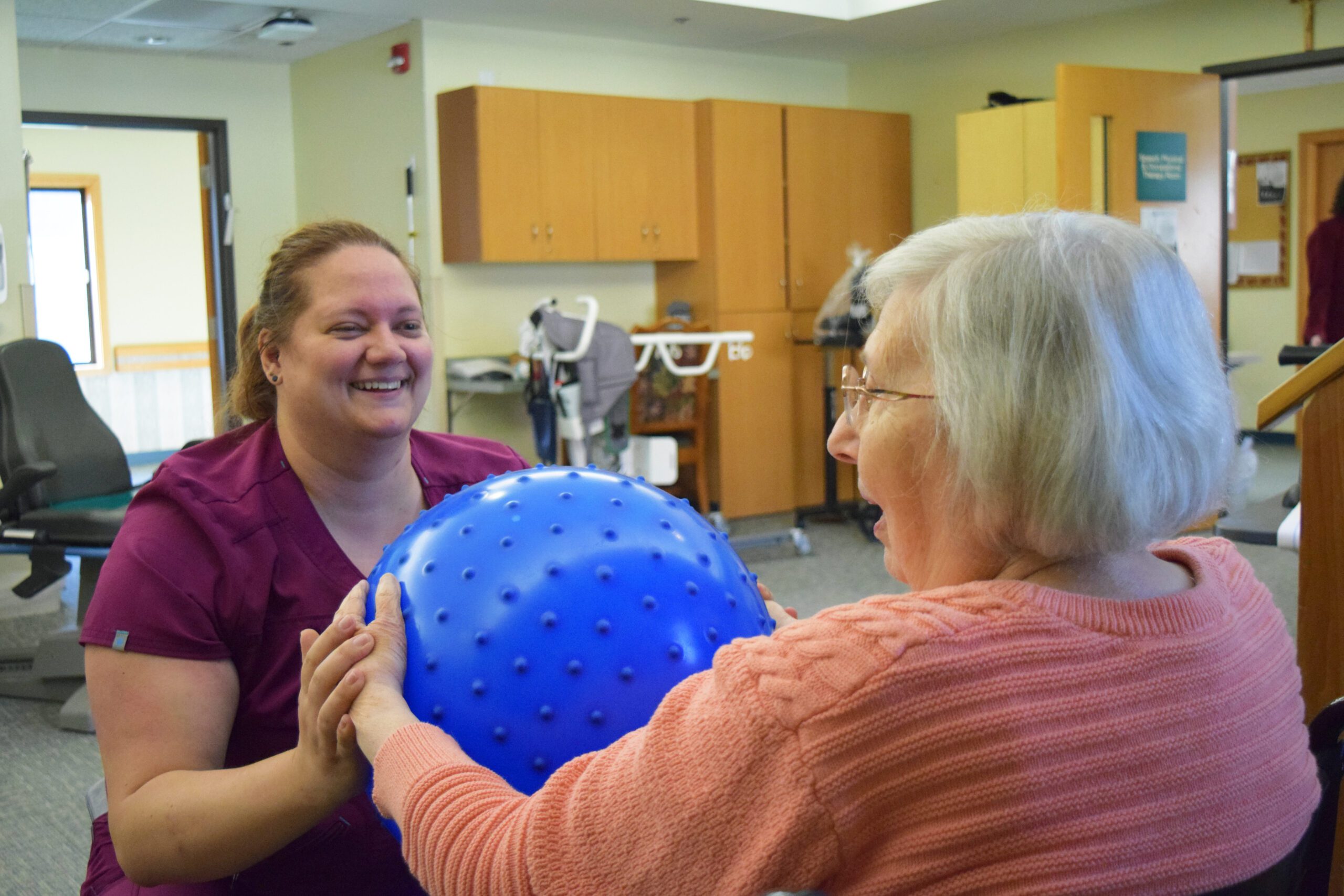
Once you are in skilled nursing, you must continue to participate in the program and be making strides towards your recovery. If you are no longer able or interested in working with therapy, your insurance will not authorize you to continue to stay in the program. This can feel like tough love, you already don’t feel good and now you’re required to work with multiple therapy disciplines a day. Trust me, it’s for your own good, as hard as that might be to accept sometimes. Skilled nursing therapists and nurses are well versed in your condition and have received documentation from the hospital regarding your previous level of functioning and also the situation that led to your hospitalization. They will not ask you to do more than you can safely do, but that doesn’t always mean that the work required to regain your independence is easy or fun. It’s hard work, but the more effort and energy you put into it, the more you get out of it.
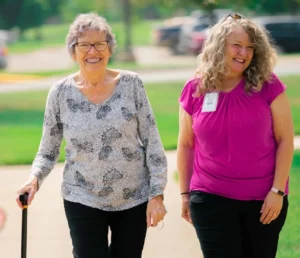 In all the years I’ve served as our hospital liaison, I’ve learned that the #1 indicator of success and recovery in skilled nursing is attitude! I’ve seen a 102 year old woman with a broken hip come back faster and more independent than a 65 year old with the same impairment because she had a great attitude and intended to get better so she was focused on doing the tough work required. I think people of the faith also have a better experience and likely more positive outcomes when they come to Catholic Care Center for their short-term skilled nursing stay because in addition to the outstanding nurses, therapist, and physicians we have providing care – we also have the unique opportunity of offering daily Mass in the chapel, communion if they can’t make it to the chapel, and the spiritual support of our full time Chaplain and Director of Pastoral Care (both of whom are truly generous with their time and always make a point to check in on our friends recovering in skilled nursing).
We’ve even had a few friends who are not of the faith find solace in our ministry. Many years ago when Father Andy Kuykendahl was serving as our Chaplain, he called on a skilled nursing patient who was less than thrilled to be here and was being a little prickly with the nurses. Father stopped by for a visit, and in his classic style made a connection and helped the gentleman to relax. The patient even asked if he’d come back again sometime. Later than day, I’d stopped in to check on him and he told me he had a question. He said he was confused because the nurses told him the man on the scooter who’d come to visit him was a Catholic priest, but that can’t be true he insisted, because that guy “was so much fun to talk to.” I assured him it was true, and that he was also correct about Father Andy being a lot of fun! I shared that story with Father and he laughed and said that was probably one of the greatest compliments he’d ever received. They did have more visits, and I’d like to think that man went away with a different opinion about our Catholic faith (or at least our priest).
What to Consider When Searching for Skilled Nursing in Wichita, KS
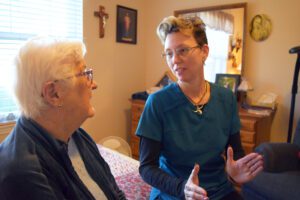 While we all hope to never be in need of skilled nursing, it’s important to be prepared to make a good choice if the situation arises. How do you know which one is right for you? It’s important to consider the level of care that is provided. How often does the physician team see patients, are the nurses trained to handle complex medical cases? Is the environment conducive to your comfort? Clean, safe, welcoming? Is it a place that your family and friends will be comfortable visiting? And probably most importantly, do they have the resources to help you in your recovery?
In addition to dementia care, assisted living, and senior living in Wichita – Catholic Care Center is fortunate to be recognized as a preferred skilled nursing provider by all the major local hospital systems because of the high-quality care that we provide, and we have invested in creating and maintaining a clean, modern, and comfortable skilled nursing unit that is welcoming and supportive of patients and their families. While we’d love the opportunity to serve you in the event you need skilled nursing, the most important thing is that you identify the best community for you and have that choice in mind should the need arise, and be positive, attitude really is everything!