

Independent Living Helps Maintain Mobility for Our Residents
Helping or Hindering? How to Support Those We Care For
This “Aging with Grace” article was written by Jennifer Sanders and published in the Catholic Advance, The Official Newspaper of the Diocese of Wichita.
Most of us are naturally wired to be “helpers.” From a very young age, we were praised for helping mom, being a helper with tasks in our elementary school classrooms, and volunteering around our community. I like to tease my friends and family when they are doing things that in the moment don’t seem wise, that as a lifelong member of the Safety Patrol, I must interject. Some of us take these childhood oaths very seriously!
Even as adults, it is rewarding to help those in need, and often we benefit as much as the person we are helping by lending a hand. As caregivers, we are quick to provide the care and support our loved ones need, but maybe sometimes we are too quick to help. This probably seems counterintuitive, especially when we think about caring for seniors. We honor and respect them by caring for them and supporting them in their aging journey; it’s an act of love.
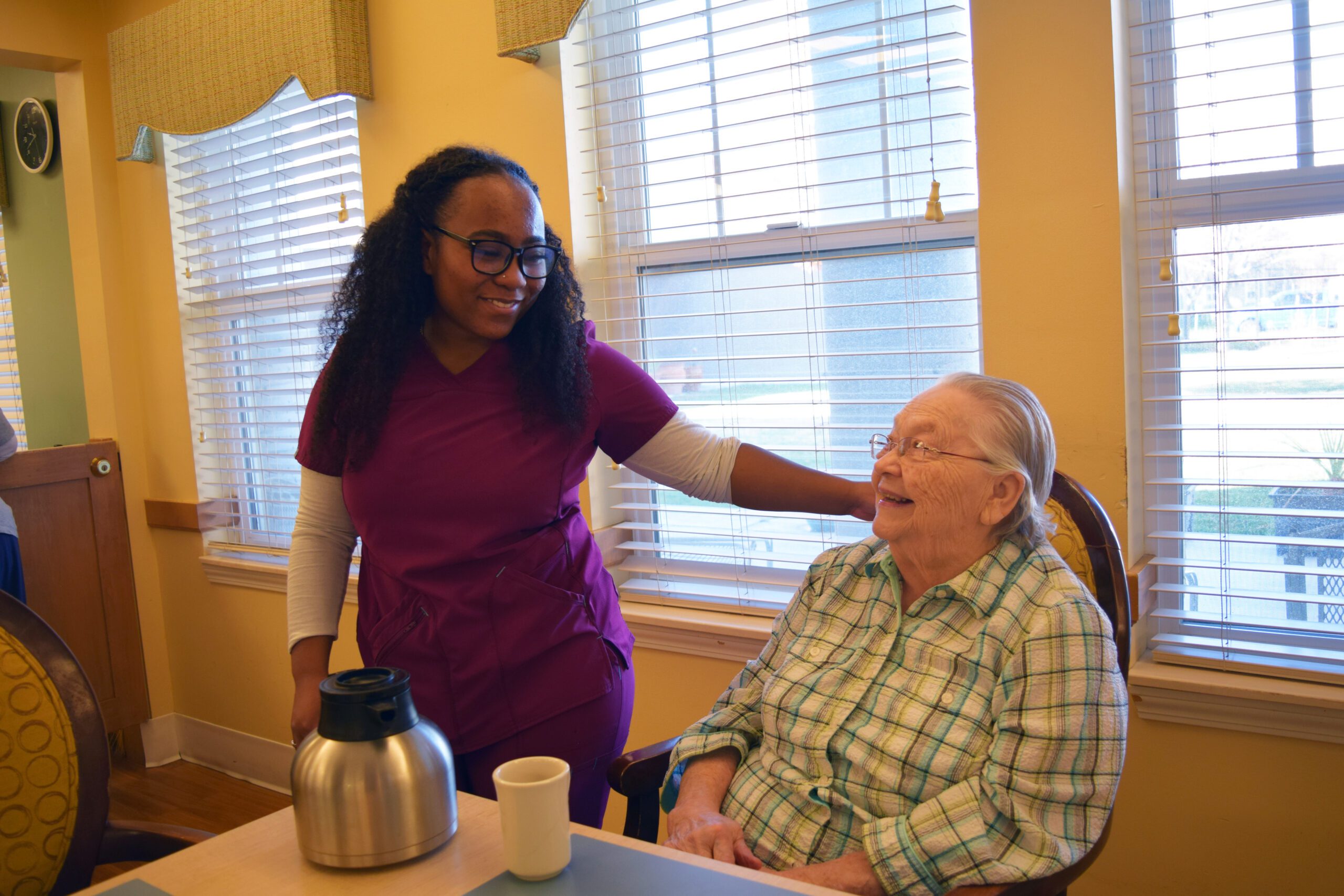
This is true, but what is also true is that sometimes our eagerness to help can stifle a person’s ability to remain as independent as possible and maintain the mobility they have. When we are training new caregivers to begin their service at Catholic Care Center, we advise them that everything you do for someone is something you take away from them. Now obviously, a lot of the residents we are blessed to serve need care, as we are fortunate to be called to serve them. This message is more about allowing people to do things for themselves to the extent that they are able.
For example, maybe you have a loved one who can walk the short distance from the living room to the dining room for a meal. It is a slow process and would be much more time efficient to help them to the table in a wheelchair, but with patience and support, they can make the walk. I think a lot of people, as compassionate caregivers, would be ready with the wheelchair and want to offer the ride when the reality is that, over time, not using these muscles will result in a loss of strength and ability. Most will agree that we want to help maintain that mobility as much as possible.
Independent Living Care in Wichita: Creating Opportunities for Success
Sometimes when we try to determine what care will need to be provided, we are really trying to assess if the “need” for help is our own impatience and wanting to save time by expediting the task, or truly an inability of a person to perform the task themselves. This can be very tricky to fully sort out. I remember several years ago, there was a gentleman who was with us for a short-term rehab stay after a stroke. One day I was visiting with he and his wife in his room and he was lamenting to the both of us that “no one was helping him around here like he thought we would be” I inquired about the lack of help and he explained that our staff were “making” him brush his own teeth, comb his own hair, and tie his own shoes. His wife looked at him and smiled, and asked if he’d managed to get those things done? He replied that in fact, he had. It had been slow going, but he did it. I will always remember the look on his face when she congratulated him on his achievements and reminded him that this is why he is here, not so we can do these things for him, but so he can learn to do them for himself, because she certainly expected that he would be doing those things when he returned home. Sometimes a little tough love is required in these situations.
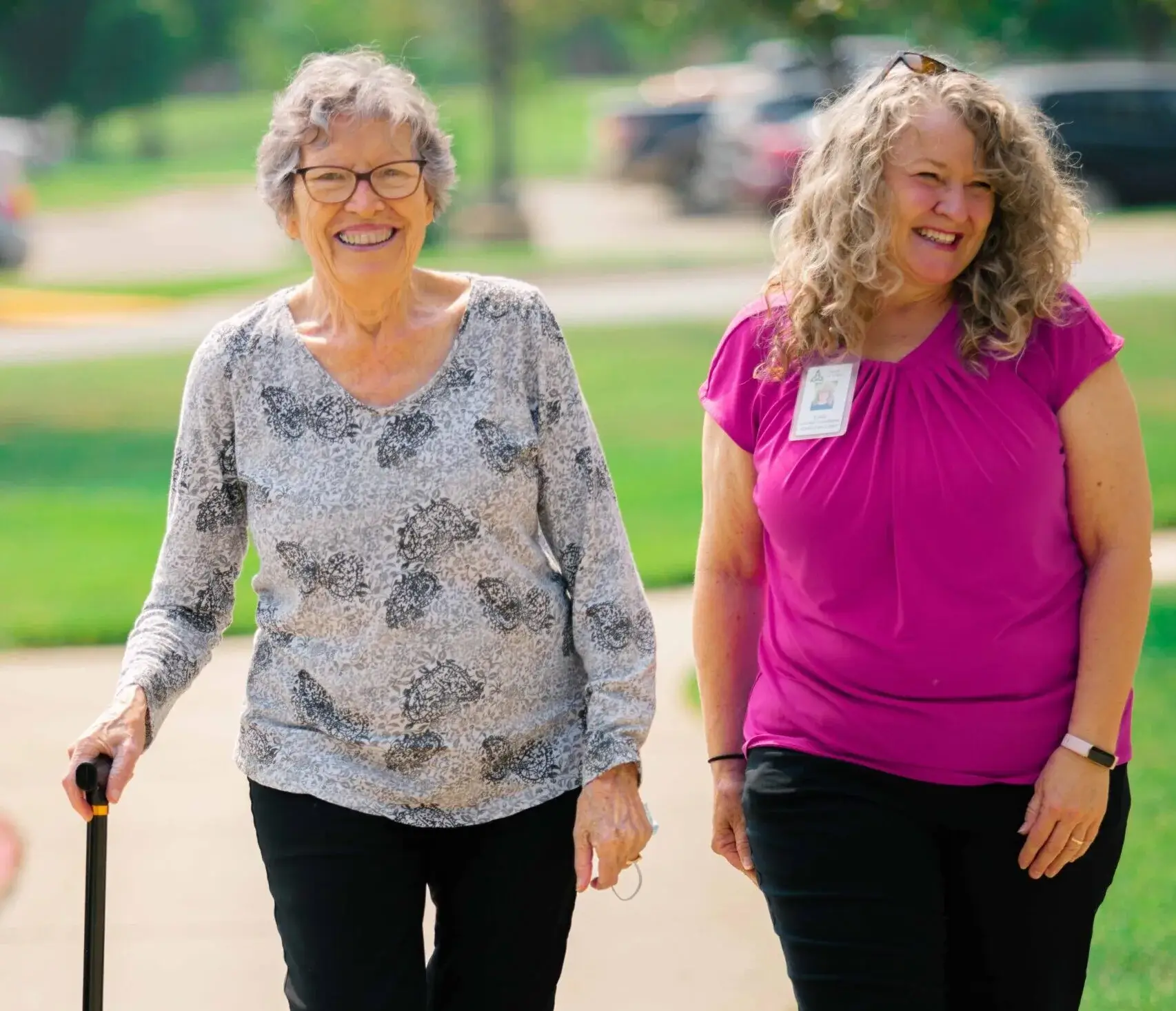
Likely there will always be things as caregivers that we take the reins and do out of necessity, but consider also how to identify those tasks that, with time and effort, might be achievable solo. Maybe even amending the situation to provide a level of assistance, but still creating opportunities for personal accomplishment. This is often a lesson in trial and error, so don’t become discouraged if you have to amend your strategy multiple times. Early on in my career at Catholic Care Center, a resident in Assisted Living approached me and asked for assistance getting his shoes on. Now, truth be told, I should have located a member of our clinical team to assist us, but like many of you, I am a “helper,” so I, of course, said yes! After a few minutes of struggling to get the thick leather, lace up shoes on, he looked a little puzzled and said, “you forgot to let me put on my socks first” Even as someone who routinely wears socks, I was so eager to be of assistance that I completely overlooked the fact that he didn’t have his on and was focused only on demonstrating my care and concern for him by putting on his shoes as asked.
As eager as we all are to be helpers, let’s take a moment to ensure the socks are on, and that we are not inadvertently taking away someone’s ability to care for themselves by helping too much when we can create opportunities for success, and help our loved ones in a meaningful way, to help themselves.
When it comes to senior living in Wichita, KS – Catholic Care Center offers senior care for every stage. Whether you or a loved one is searching for independent living or assisted living in Wichita – we can help. We also offer long-term senior care, including dementia and memory care. If you have questions, our experienced staff is happy to provide answers. Please call us at (316) 744-2020 or fill out our contact form here.